Wedding Stress & Anxiety: Expert Tips for Calmer Planning


Planning your wedding is an exciting experience in so many ways, but it can also bring with it many forms of wedding stress. And it’s more common than you might think.
“When you consider the financial pressure, constant decision-making and family expectations involved, often alongside work and everyday responsibilities, it’s easy to understand why couples feel stressed and experience pre-wedding nerves,” says psychological coach Lucy Spicer.
Throw in logistics like seating plans and schedules, as well as everyday relationship maintenance and taking care of yourselves, and it can all feel like an impossible feat at times.
That’s why, ahead, we’ve compiled advice on how to handle wedding day stress and anxiety, with effective ways to calm your nerves, both ahead of the wedding and on the day itself.
Read on to discover the expert-approved tips for handling the pressure and reclaim the excitement of planning your day. You’ve got this!
Why is Wedding Planning So Stressful?

First and foremost, the most important thing to note is that wedding planning stress is normal, and everything you’re feeling is completely valid.
“Even small decisions can start to feel exhausting when you’ve already made hundreds of them. Add the pressure for this to be ‘the best day of your life’, and choosing flowers or writing a guest list can suddenly feel like a test you need to get right,” says Lucy.
“Social media can amplify this, encouraging you to compare your plans, appearance and budget with someone else’s, which can leave you questioning whether your own wedding is even enough,” she adds.
Here are just some of the reasons why you might be feeling overwhelmed:
- Decision fatigue. Roses or peonies? Round tables or long? Chicken or short rib? Hundreds of choices, many of them for the first time…
- Money. You’re likely spending more than you’ve ever spent on a single event, it is natural to be stressed about balancing the budget and covering the costs.
- Family expectations. Traditions, opinions, and financial contributions that often come with strings.
- Friendships. Weddings can be an emotional process for everyone in your circle. Wedding party choices, hen and stag plans, and shifting dynamics can all result in you having to manage the feelings of others.
- The guest list and seating plan. A tough call as it is – throw in the opinions of friends and family, and you’ve reached a whole new level of stress.
- Comparison. Social media showing everyone else’s highlights can distort your views of your own wedding, not to mention lead you to thousands of options that can feel confusing.
- The mental load. Planning can often fall unevenly onto one partner. If you’re the default decision-maker, the one who anticipates what needs doing, and remembering the details of what comes next, you can start to feel more like a project manager than a team.
How Do You Stop Wedding Planning Feeling Overwhelming?

The good news is that there are some simple things you can do to cope with wedding stress and mitigate the wedding planning overwhelm that you’re feeling.
“I try to encourage couples to identify what’s driving their stress,” suggests Lucy.
“Are you overwhelmed by the number of decisions, worried about disappointing someone, or putting pressure on yourself to get everything perfect? Once you recognise the source, you can take practical steps to address it, whether that’s narrowing your options, having an honest conversation, or sharing responsibility.
“That awareness helps you regain a sense of control and make more room for enjoying the experience,” she adds.
If you feel like much of your wedding stress comes from the sheer amount of decision making and admin, here are some tips that can help:
- Agree your top three priorities – and let everything else be good enough. “Ask yourselves, ‘how do we want our wedding to feel?’ Return to this when decisions become difficult. It gives you a reference point and helps you recognise when you’re making a choice to please others or keep up with something you’ve seen online,” says Lucy.
- Break planning into small, dated tasks rather than one giant to-do list. “Write everything down in one place, then identify what genuinely needs your attention this week. Break larger tasks into specific next steps: ‘Contact three photographers’ feels more manageable than ‘sort the photography’,” says Lucy.
- Limit how many options you look at before deciding. That goes for venues, dresses, and more. Three quotes is better than 30.
- Set planning-free days or evenings each week. “Set aside dedicated planning time, with a clear stopping point, rather than allowing it to fill every evening and conversation,” says Lucy. “Protect time together when the wedding isn’t on the agenda and keep the everyday habits that help you feel grounded, such as movement, rest and journalling.”
- Mute or unfollow accounts that leave you feeling behind. And remember, one of the first steps in breaking the cycle of social media anxiety is realising that what you’re seeing isn’t always real life.
- Delegate whole jobs (not just errands) to those you trust. “Divide responsibility so you aren’t carrying the invisible work of remembering, researching and chasing everything. Where possible, delegate ownership of a task, rather than keeping yourself responsible for supervising it,” suggests Lucy.
- Consider professional help, such as a wedding planner, if budget allows. Calling in the pros can alleviate some of the wedding-planning stress and free up your time.
How Do You Handle Family Expectations About Your Wedding?
Some of the most common wedding stress stems from communication with family and their desire to have a say in the wedding plans – particularly if they’re contributing financially to the wedding.
So, how do you prevent things from blowing up?
“Start by being clear with each other before responding to everyone else,” advises Lucy. “Agree on what you’re happy to be flexible about and which decisions you want to protect. This helps you approach conversations as a team.
“You can acknowledge someone’s feelings without agreeing to their request. For example: ‘We understand that inviting XYZ matters to you. However, we’ve decided to keep the guest list smaller, so we won’t be adding any more guests.’
“Aim to be warm, clear and consistent. Long explanations can unintentionally turn a decision into a negotiation. If family members are contributing financially, discuss early whether there are expectations attached to that contribution, so everyone understands the arrangement.
“Finally, if a conversation becomes heated, give yourselves permission to pause and revisit it when everyone feels calmer,” says Lucy.
“When frustration is at its peak, it becomes harder to listen, think clearly and communicate thoughtfully. You might say, ‘this matters to us, and we want to talk it through properly. Let’s take a break and come back to it tomorrow.’
“Agreeing when you’ll return to the conversation helps make it more constructive.”
How Do You Cope with Money Worries When Planning a Wedding?

Money worries and tackling your budget can be the main stressor for a lot of couples, but it’s important to remember that your wedding doesn’t need to break the bank to be meaningful. Here are some practical ways to help you navigate the financial stress of planning a wedding:
- Set a budget early on. No matter what your starting number is, agreeing on a budget early and understanding what your biggest priorities are is the single most important thing you can do. It’ll influence every other decision that follows, including whether you can afford that pricey four-tier wedding cake.
- Agree who is contributing financially, and on what terms. Money contributions, especially from parents or parents in law, can sometimes come with hidden assumptions such as having a direct say in the who, what or where of your wedding. Clarify this early to not only help you work out your budget but avoid any conflict later on.
- Check in with each other regularly. This will help you avoid budget overruns, share any anxieties or worries, and adjust plans if the budget changes.
- Build in a buffer for unexpected costs. A dedicated emergency fund will serve as a safety net, so you don’t need to worry about unexpected expenses that may arise during the wedding planning. Consider setting aside a portion of your income each month until you’ve built a cushion.
- Remember the average is contextual – not a target. Much like comparing yourselves to other couples on social media, the average cost of a wedding is explored to help you make informed decisions about where to budget – it’s not a benchmark to be hit.
- Don’t forget date night. Paying for a wedding doesn’t mean you have to deprive yourselves of fun – be sure to set aside a small amount each month for a date day or night to help nurture your connection as a couple amidst all the wedding stress.
How Do You Deal with Friendship Drama Before a Wedding?

Sure, your wedding day is supposed to be the event that brings everyone together, but sometimes that’s not the case – and friend fallouts are more common than you might think.
Stress-induced feuds can often be a build-up of a few things, whether it’s shade over choosing (or not choosing) someone to be part of your wedding party, friends who can’t afford hen and stag plans or the wedding itself, or that general feeling that your friends are less excited for you than you hoped.
Large events like weddings – where emotions can feel even more heightened – can also reveal the flaws in our seemingly-healthy platonic relationships that we wouldn’t otherwise see.
First thing’s first; face to face communication is always better than text – or worse, the silent treatment. When you speak over WhatsApp, you don’t see the facial expressions and body language, and tone can get lost or misinterpreted. Whether you’re the nearlywed or the friend, it’s important everyone listens and feels listened to.
If the strain in your relationship is over their role in your wedding, the best thing you can do is define their role as clearly as you can from the get-go.
If, for you, the role of a bridesmaid or maid of honour is more than just standing by your side on the wedding day, be clear that you’d like them to engage in things like dress shopping, planning the hen party, or crafting the invites – don’t assume they will already know.
Finally, don’t forget to check yourself. Are you being the best friend you can possibly be?
Naturally, you’re feeling tense and your wedding to-do list might be pulling you in all sorts of directions, but that doesn’t entitle you to complete servitude from your friends, and nor should it be an excuse for acting up. Speaking openly about the stress you’re under can help.
How Do You Calm Wedding Day Nerves?

Wedding day anxiety is common and a completely normal feeling – you’ve spent so much time building up to this moment and how you feel reflects how much it means. But there are things you can do to help mitigate those on-the-day nerves.
“Your breath is a simple tool you can return to throughout the day. If you notice nerves building, pause, soften your shoulders and take a few slow, comfortable breaths, gently allowing your exhale to last longer than your inhale,” says Lucy.
“Practise this beforehand so it feels familiar when you need it.
“Pay attention to how you’re speaking to yourself, too. Thoughts such as, ‘what if something goes wrong?’ can pull you into imagined scenarios and fuel anxiety. Bring yourself back with a reassuring affirmation: ‘I can handle this one moment at a time’, ‘I let go of what I can’t control’ or ‘I give myself permission to be present and enjoy today’.
“Choose words that feel believable and comforting to you,” she adds.
Here are some other tips for a stress-free wedding day, including practical ways to help reduce anxiety and nerves:
- Build time buffers into your wedding day schedule so the morning doesn’t feel rushed. “Make the morning easier by leaving breathing space in the schedule and choosing a trusted person to handle questions and last-minute logistics,” says Lucy. “Think about who helps you feel calm and supported, and surround yourself with that energy as you get ready.”
- Eat a proper breakfast and keep water and snacks to hand. Don’t quaff back the champagne or coffee having not even anything. A balanced breakfast will not only sustain your energy levels but help you feel more mentally present and less jittery.
- Hand your phone to someone else and name one point person for supplier questions. Your maid of honour, your venue coordinator… just be comfortable with the person you have given this job to.
- Write down two or three moments you most want to notice. “Give yourself permission to slow down – you don’t need to rush from one part of the day to the next,” says Lucy. “Build in small pauses to look around, notice the people you love and take everything in.”
- Plan a few quiet minutes together as a couple during the day. “It’s a chance to connect and appreciate the celebration you’ve created together.”
- Know it is OK if something goes differently to plan. More than likely, your guests will not know!
When is Wedding Anxiety More Than Just Nerves?
Naturally your wedding will inspire a whole range of emotions – but there may be times when you question whether what you’re feeling is more than just a touch of nerves.
Look for signs that your anxiety might need more support, such as struggling to sleep, eat or focus on work, if you’re suffering from panic attacks, paralysing anxiety or a dread that feels constant.
It’s vital to look after your mental wellbeing and help is available from the following resources:
- Your GP – a good first step for ongoing anxiety
- Mind’s Wedding Wellbeing Guide – a free guide to looking after yourself while planning
- Mind Info Line: 0300 123 3393
- Samaritans: 116 123 – free, any time, if you need to talk to someone urgently
Wedding Stress FAQ

Is it normal to feel anxious before your wedding?
Yes! Getting married marks a huge change in your life, so it’s completely normal to feel nervous or anxious. You also will have likely spent a huge amount of time and money planning this day – navigating budgets, logistics and family dynamics, so it’s natural to feel anxious that the event will go ahead as planned.
How far in advance should you start planning to avoid wedding stress?
Aim to start planning your wedding around 12-18 months in advance to comfortably secure your preferred venue and wedding suppliers without feeling rushed. It’s possible to plan a wedding at much shorter notice, but the earlier you begin, the more time you will have to plan, find the right suppliers, and pay for them.
Can a wedding planner help with wedding stress?
If budget allows, hiring a wedding planner can alleviate some of the planning stress, particularly when it comes to supplier sourcing, admin and figuring out logistics.
Having someone who can help with on-the-day coordination, whether a wedding planner or venue coordinator, will help to keep things running smoothly on the day itself.
How do you stop wedding planning taking over your relationship?
The best way is to ensure the wedding planning is balanced, and no single person is taking on too much of the mental load. Schedule in plenty of quality time together, too, where wedding planning is off the agenda.
Instead, pencil in specific windows to tick off any wedding planning tasks together. Categorising your to-do list can also help stop you feeling so overwhelmed.
Is it okay to scale back your wedding plans if it all feels too much?
Yes, it’s OK to scale back if your wedding plans feel too much, particularly if they are causing you financial stress. Remember what’s most important, why you’re getting married in the first place, and always refer to your main three priorities.
Ready to break down the planning?
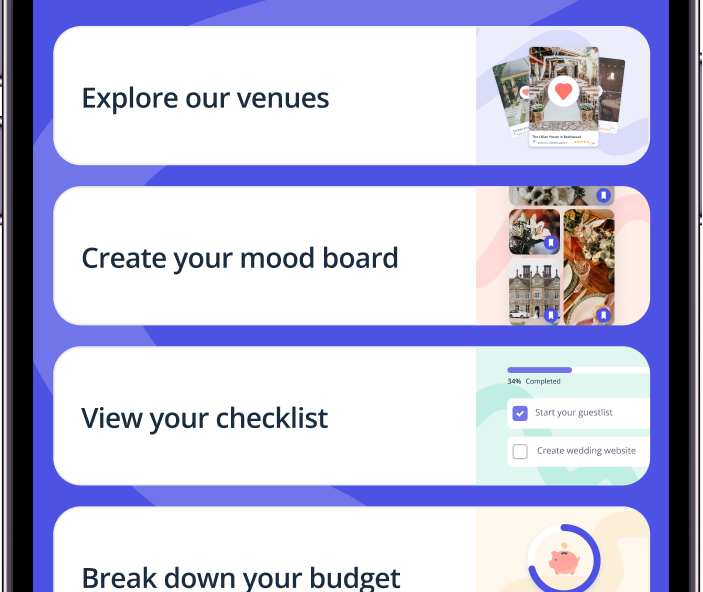
Bridebook, the UK’s #1 wedding planning platform used by over 2.8 million couples, has a free wedding planning checklist that breaks planning into manageable monthly tasks, so you only need to focus on what’s due now.
Why Trust Bridebook
Bridebook is the UK’s #1 wedding planning platform, used by over 2.8 million couples. Our content is informed by real data from the Bridebook UK Wedding Report, which draws on responses from thousands of couples planning their weddings each year. Where expert input is included, contributors are named and their credentials verified. We update our articles regularly to ensure prices, statistics, and advice reflect current market conditions.
You Might Also Like
- The Ultimate Wedding Planning Checklist
- Who Traditionally Pays For What
- How Much Does A Wedding Cost? The UK Average
- Wedding Roles Explained: Who Does What At A Wedding
- How To Discuss Your Wedding Guest List With Your Family
Related articles